
Rwanda’s first PISA results highlight gaps in student learning
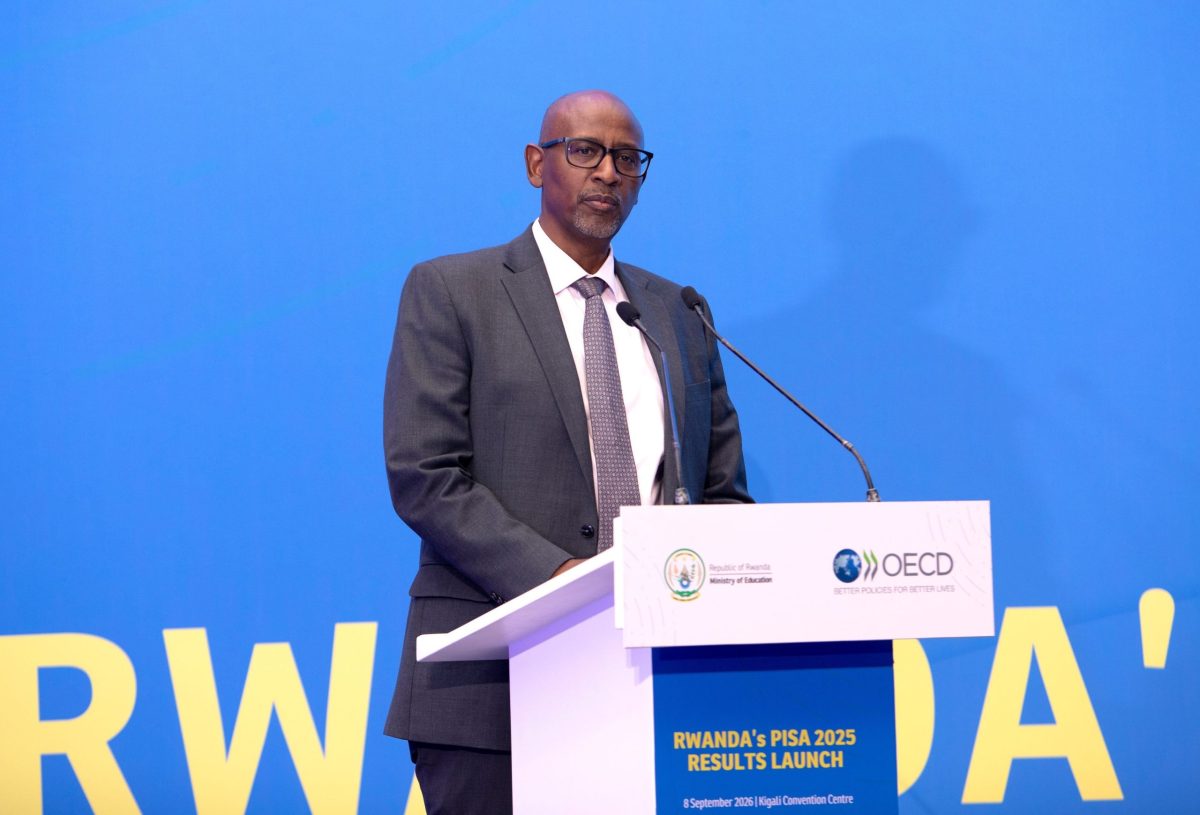
Only 12.7% of Rwandan students who took part in the 2025 Programme for International Student Assessment (PISA) reached the baseline proficiency level in science, with lower proportions achieving the benchmark in mathematics and reading.
Results released in Kigali on Tuesday showed that 7.7% of students reached the baseline level in mathematics, compared with 3.9% in reading.
The assessment marked Rwanda’s first participation in PISA, an international study run by the Organisation for Economic Co-operation and Development (OECD) that measures how well 15-year-old students can apply their knowledge and skills to real-life situations.
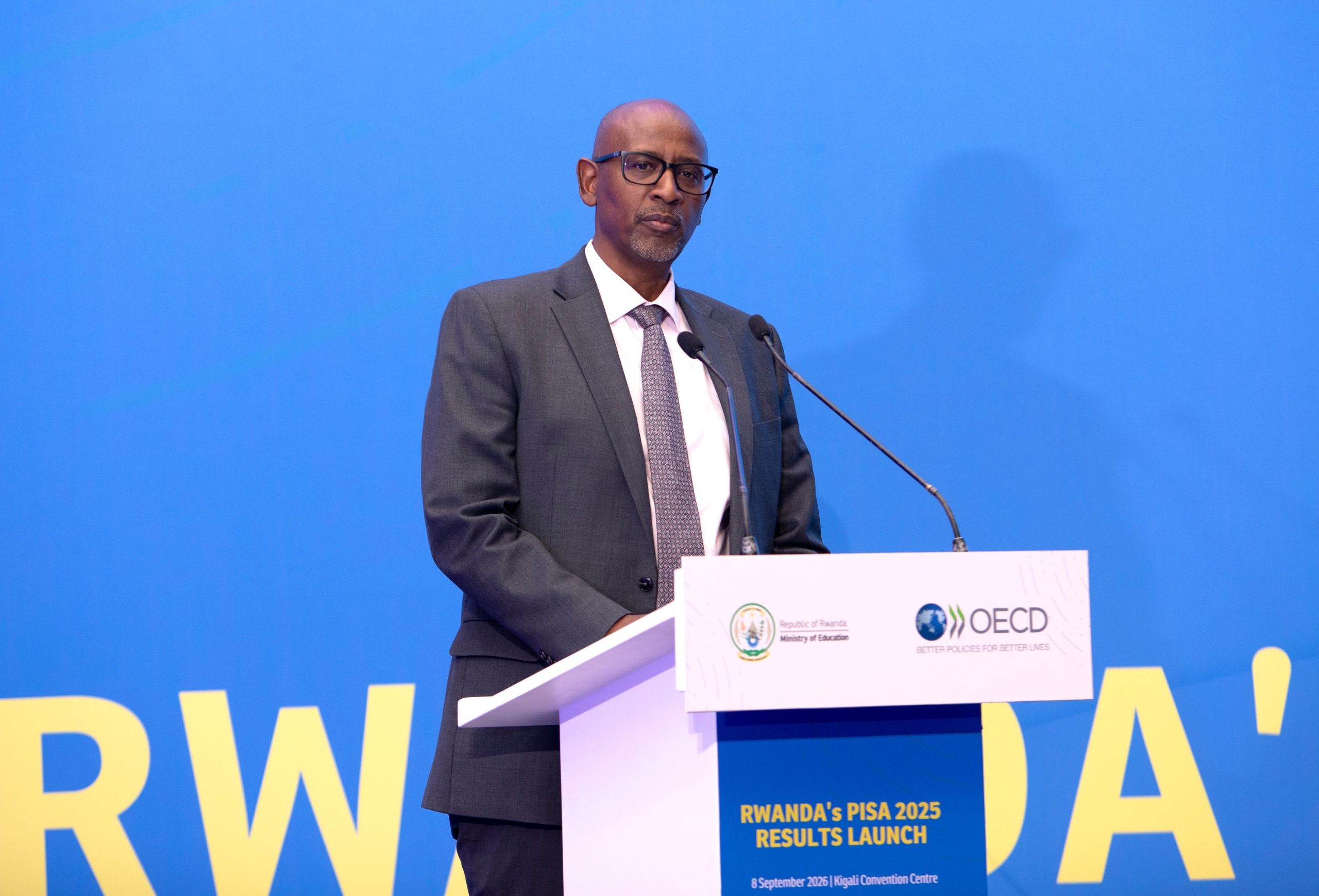
Education Minister Joseph Nsengimana said the results provide an opportunity for Rwanda to compare its education system with those of other countries and identify areas that need improvement.
“PISA gives us a window into what we are doing and what we are teaching, and how those we teach are applying that knowledge in everyday life,” he said.
Mr Nsengimana acknowledged that Rwanda’s performance was below the level the country wants to achieve, particularly in reading comprehension, mathematics and science.
He said the findings should be addressed openly rather than explained away, adding that they were consistent with concerns identified through Rwanda’s national assessments.
“We will study the results and use them to set targets for improving learning outcomes,” he said.
The minister said the country would focus on strengthening the fundamentals of learning, improving teaching quality, supporting teachers and ensuring schools have the conditions needed for students to succeed.
“Our ambition remains clear: every learner in Rwanda must have access to quality education and acquire the knowledge, skills and competencies needed to succeed in further education, employment and life,” he said.
Rwanda will also study countries that have improved their PISA performance to identify lessons that could be applied locally. Mr Nsengimana cited Cambodia as an example of a country that has significantly improved its performance over a relatively short period.
Rwanda plans to participate in PISA 2029, providing an opportunity to assess whether measures introduced in response to the current findings are improving learning outcomes.
What the results show
Didas Kayihura Muganga, acting vice chancellor of the University of Rwanda, said PISA provides an opportunity to assess whether Rwanda’s competence-based curriculum is delivering the skills it was designed to develop.
“It is not only about how we teach in classrooms, but also about the impact of what students learn. Are they able to translate that knowledge into problem-solving?” he said.
Mr Muganga also highlighted the role parents can play in supporting their children’s learning, while noting that not all parents have the same level of education or ability to provide such support.
He said simple conversations about what children have learned and how they can apply it in everyday life can contribute to the learning process.
However, he cautioned against assuming that all parents are equally able to provide such support.
The assessment also covered issues such as cyberbullying. Mr Muganga questioned whether some of the findings fully reflect students’ experiences across Rwanda, particularly those in boarding schools where access to phones and computers can be restricted.
He said the results should be used to identify gaps in the education system and guide efforts to address them.
“This is the first of its kind. When we do the second one in 2029, we should be able to see whether the investments we are making to address the gaps are producing results,” he said.
Learning from other countries
Soumaya Maghnouj, an analyst in the PISA Directorate for Education and Skills at the OECD, said the assessment gives Rwanda an independent view of how its students perform against international measures.
“PISA provides both a window and a mirror for the education system,” she said.
“It allows Rwanda to see how its students fare against global education measures and to learn from countries with different contexts, including its neighbours and those further afield.”
Ms Maghnouj said the findings could help Rwanda identify areas requiring further investigation, including teaching and learning policies, school resources and support for students.
She also pointed to students’ optimism about their future and the value they place on education as a strength.
“The challenge for the Rwandan education system is to turn that hope into stronger performance,” she said.
“That requires identifying the policies and interventions needed to improve teaching and learning and respond to students’ specific needs.”